 +91-9667229022| +91-9811604479


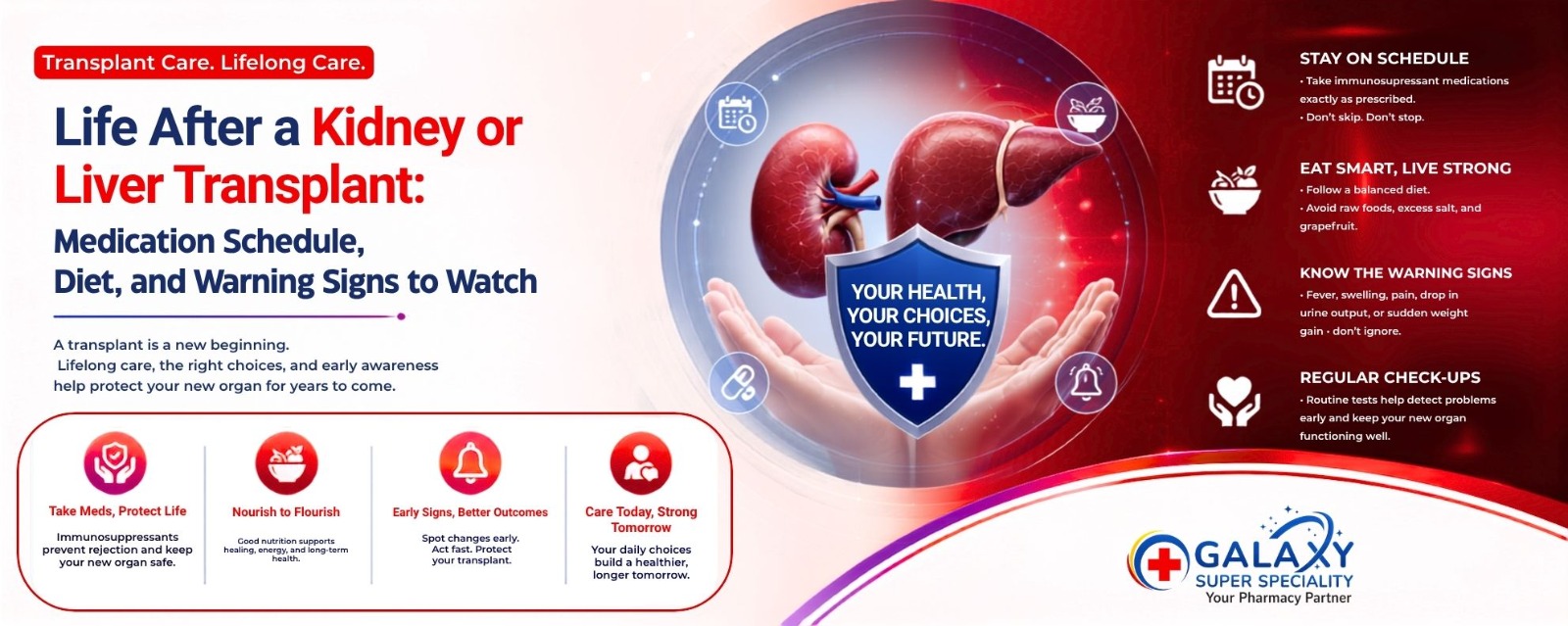 A kidney or liver transplant can be a life-changing new beginning, but life after kidney or liver transplant also comes with an important responsibility: protecting the transplanted organ through consistent medication, appropriate nutrition, regular monitoring and prompt attention to changes in health.
After transplantation, anti-rejection medicines, also called immunosuppressants, are essential because the immune system can recognize the transplanted organ as foreign and attack it. These medicines need to be taken exactly as prescribed, and doses should not be changed or stopped without guidance from the transplant team.
Why Post-Transplant Care Matters
A transplant does not mean that medical care ends after surgery.
Instead, it marks the beginning of a long-term partnership between the patient and the transplant healthcare team.
Regular follow-up allows doctors to monitor:
- Function of the transplanted organ
- Medication levels
- Kidney and liver function
- Blood pressure
- Blood glucose
- Signs of infection
- Possible rejection
- Medication-related side effects
- Overall nutritional and metabolic health
For kidney transplant recipients, routine blood tests can sometimes identify early signs of rejection before noticeable symptoms develop.
This is why regular check-ups are an essential part of life after kidney or liver transplant.
1. Take Anti-Rejection Medicines Exactly as Prescribed
One of the most important rules after transplantation is simple:
Do not skip or stop your anti-rejection medicines unless your transplant team tells you to.
Common immunosuppressive medicines may include drugs such as tacrolimus, cyclosporine, mycophenolate, azathioprine or corticosteroids, depending on the patient’s transplant and treatment plan.
The exact combination and dose can change over time.
Some medicines require blood-level monitoring because the dose needs to remain within an appropriate range. Too little immunosuppression can increase the risk of rejection, while excessive immunosuppression can increase the risk of infections and other complications.
Practical Medication Tips
Patients can make medication adherence easier by:
- Taking medicines at the same times every day
- Using a pill organizer if recommended
- Setting phone reminders
- Keeping an updated medication list
- Planning refills before medicines run out
- Carrying medicines when travelling
- Informing every healthcare professional about the transplant
Never start an over-the-counter medicine, herbal product or supplement without checking with the transplant team or pharmacist because interactions can affect transplant medicines.
2. Never Stop Medication Because You Feel Better
Feeling healthy after a transplant is a positive sign—but it does not mean anti-rejection medication is no longer needed.
The immune system can continue to recognize the transplanted organ as foreign even when the patient feels completely well.
Some transplant recipients may eventually have their medication doses reduced, but this should only happen under specialist supervision.
Never reduce or stop immunosuppressants independently.
3. Follow a Transplant-Friendly Diet
Nutrition after transplantation should be individualized.
A dietitian or transplant healthcare professional can help develop an eating plan based on:
- Kidney or liver function
- Blood pressure
- Blood glucose
- Cholesterol
- Weight
- Current medicines
- Other medical conditions
For kidney transplant recipients, dietary needs may change substantially compared with the period before transplantation. NIDDK recommends working with a dietitian to develop an eating plan that can be adjusted according to medicines, test results, weight and blood pressure.
Foods and Drinks That May Need Special Attention
Some foods can interact with transplant medicines.
Grapefruit and grapefruit juice, for example, can affect the levels of certain immunosuppressants such as tacrolimus, cyclosporine and sirolimus.
Other food-safety precautions may also be important because immunosuppressive medicines increase susceptibility to infections. For liver transplant recipients, NIDDK advises avoiding certain higher-risk foods such as unpasteurized dairy products and raw or undercooked meat, seafood and eggs.
Always follow the specific dietary instructions provided by your transplant team.
4. Protect Yourself From Infection
Immunosuppressants reduce the activity of the immune system to protect the transplanted organ.
The downside is that they can also increase susceptibility to infections, particularly during periods when immunosuppression is higher.
Patients should contact their transplant team if they develop concerning symptoms such as:
- Fever
- Persistent cough
- Burning or pain while urinating
- Unusual wound drainage
- Persistent vomiting or diarrhoea
- Significant weakness
- Breathing difficulties
The exact symptoms requiring urgent assessment can vary according to the transplant type and stage of recovery.
5. Know the Possible Warning Signs of Rejection
Rejection does not always cause obvious symptoms at first.
In kidney transplant recipients, routine testing can sometimes detect rejection before the patient notices changes. However, possible warning signs can include:
- Reduced urine output
- Swelling
- Sudden weight gain
- Increased blood pressure
- Pain or tenderness around the transplanted kidney
- Fever or flu-like symptoms
These symptoms can have causes other than rejection, but they should not be ignored in a transplant recipient.
For liver transplant recipients, changes in liver function may also be detected through routine blood tests before significant symptoms appear.
6. Monitor Changes in Weight, Blood Pressure and Other Health Measures
Regular monitoring is an important part of transplant follow-up.
Depending on the patient’s condition, the transplant team may monitor:
- Weight
- Blood pressure
- Blood glucose
- Kidney function
- Liver function
- Medication levels
- Cholesterol
- Blood counts
Some immunosuppressants can contribute to problems such as high blood pressure, diabetes or changes in kidney function, which is another reason regular follow-up is important.
7. Keep Every Follow-Up Appointment
A transplant may function well for years, but continued monitoring remains important.
Regular appointments allow doctors to identify changes early and adjust treatment when necessary.
Blood tests can be particularly valuable because changes in organ function or medication levels may occur before the patient develops noticeable symptoms.
Do not wait until you feel unwell to attend routine transplant appointments.
8. Be Careful With New Medicines
After transplantation, even common medicines can require additional consideration.
Some prescription medicines, over-the-counter products, herbal preparations and supplements can interact with immunosuppressants.
Patients should therefore tell their doctor or pharmacist that they have received an organ transplant before starting a new medicine.
This includes products marketed as:
- Herbal remedies
- Natural supplements
- Vitamins
- Weight-loss products
- Sports supplements
- Over-the-counter medicines
Natural does not automatically mean safe after transplantation.
9. Build Healthy Long-Term Habits
A transplant is an opportunity to focus on long-term health.
Depending on the patient’s medical condition and transplant team’s recommendations, healthy habits may include:
- Eating a balanced diet
- Staying physically active
- Maintaining a healthy weight
- Avoiding smoking
- Limiting alcohol when medically appropriate
- Following vaccination recommendations
- Getting adequate sleep
- Managing blood pressure and blood glucose
- Attending regular medical appointments
The exact recommendations should be personalized according to the transplanted organ and the patient’s overall health.
Kidney Transplant Care vs Liver Transplant Care
Although many principles are shared, kidney and liver transplant recipients can have different monitoring and treatment requirements.
After a Kidney Transplant
The transplant team may closely monitor:
- Creatinine and kidney function
- Urine output
- Blood pressure
- Immunosuppressant levels
- Fluid balance
- Signs of rejection or infection
Reduced urine output, swelling, fever or pain around the transplant kidney should be reported promptly.
After a Liver Transplant
Monitoring may focus on:
- Liver function tests
- Immunosuppressant levels
- Signs of rejection
- Infection
- Medication side effects
- Nutrition and metabolic health
Regular blood testing is an important component of monitoring liver transplant function.
When Should You Contact Your Transplant Team?
Contact your transplant team promptly if you experience unusual or concerning changes, particularly:
- Fever
- Reduced urine output after kidney transplantation
- Significant swelling
- Sudden weight gain
- New or worsening pain
- Blood in the urine
- Persistent vomiting or diarrhoea
- Difficulty breathing
- Signs of infection
- Problems keeping medicines down
- Running out of anti-rejection medication
If symptoms are severe or life-threatening, seek emergency medical care immediately.
Life After Transplant: Protect the Gift of a New Beginning
A successful transplant is not the end of the journey—it is the beginning of a new phase of care.
Taking medication consistently, eating appropriately, recognizing warning signs and attending regular follow-ups can help patients and their healthcare teams protect the transplanted organ over the long term.
The transplant team remains an important source of guidance because recommendations can vary based on the organ transplanted, medicines used, medical history and individual circumstances.
Transplant Care at Galaxy Super Speciality
At Galaxy Super Speciality, transplant care is centered around long-term follow-up, specialist monitoring, medication management and patient education.
For kidney or liver transplant recipients, our healthcare approach focuses on helping patients understand their medication schedules, follow-up requirements, nutrition and warning signs that may require medical attention.
If you or your loved one has undergone a kidney or liver transplant and has concerns about medicines, diet, symptoms or ongoing monitoring, speak with your transplant specialist rather than making changes independently.
Conclusion
Life after kidney or liver transplant is a lifelong journey of care.
Your transplanted organ needs more than a successful surgery. It needs consistent medication, appropriate nutrition, regular monitoring and timely medical attention when something changes.
Take your medicines. Keep your appointments. Know your warning signs. Protect your health.
Because transplant care does not end when you leave the hospital—it continues every day.
Frequently Asked Questions
How long do I need to take anti-rejection medicines after a transplant?
Many transplant recipients need immunosuppressive medicines for as long as the transplanted organ is functioning. The exact treatment plan varies, and medicines should never be stopped without instructions from the transplant team.
Can I stop my transplant medicines if I feel completely healthy?
No. Feeling well does not mean rejection cannot occur. Never stop or change anti-rejection medicines without speaking with your transplant team.
Can I eat grapefruit after a transplant?
Grapefruit and grapefruit juice can interact with certain immunosuppressive medicines, including tacrolimus and cyclosporine. Ask your transplant team whether you should avoid them.
What are possible signs of kidney transplant rejection?
Possible signs include reduced urine output, swelling, sudden weight gain, increased blood pressure, fever or pain around the transplanted kidney. Rejection can also occur without noticeable symptoms, which makes routine monitoring important.
Can transplant patients take over-the-counter medicines?
Not all medicines are appropriate after transplantation. Some can interact with immunosuppressants or affect kidney function. Always check with your transplant team or pharmacist before taking a new medicine, supplement or herbal product.
How often should transplant patients have check-ups?
Follow-up schedules vary depending on the transplant type, time since surgery, medicines and overall health. Your transplant team will establish the appropriate monitoring schedule.
Can I exercise after a transplant?
Many transplant recipients can gradually return to physical activity, but the timing and type of exercise should be discussed with the transplant team, particularly during recovery after surgery.