 +91-9667229022| +91-9811604479


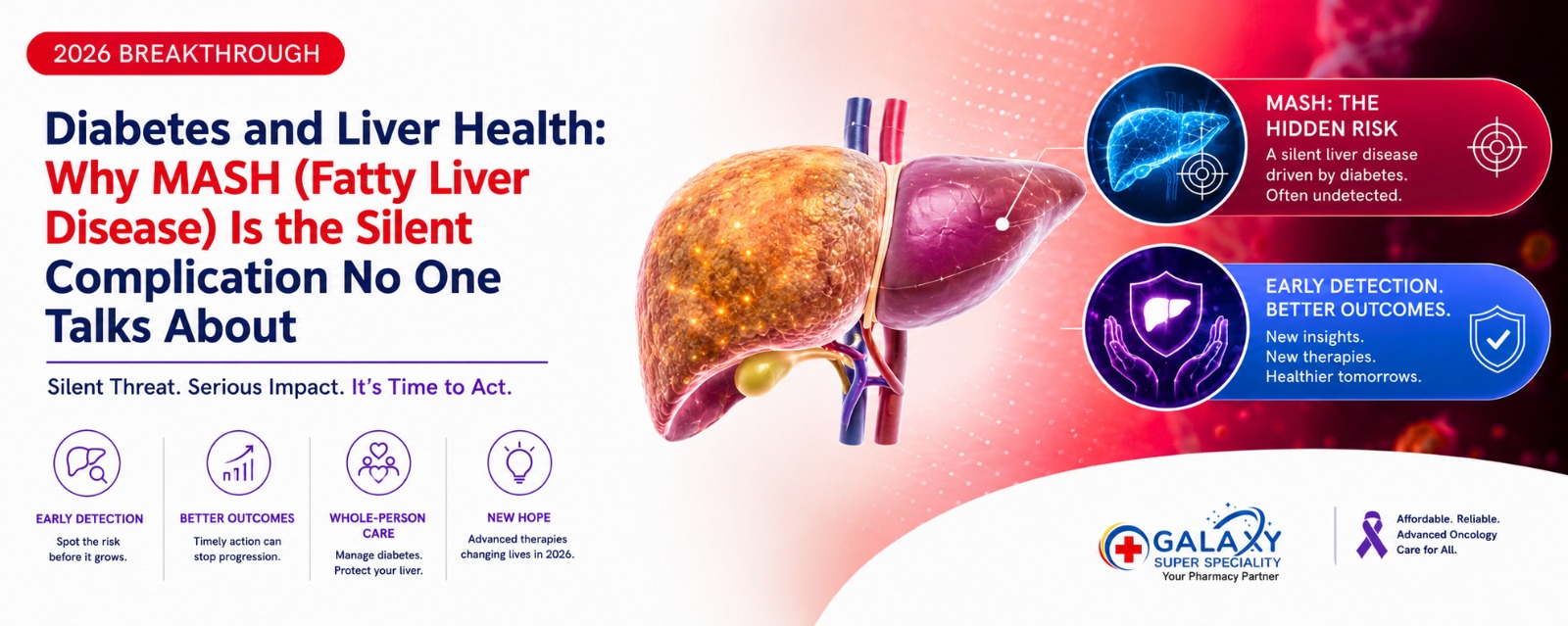 MASH and diabetes are closely connected through the metabolic health of the body. People living with type 2 diabetes are at increased risk of metabolic dysfunction-associated steatotic liver disease (MASLD), a condition in which excess fat accumulates in the liver.
In some people, MASLD can progress to metabolic dysfunction-associated steatohepatitis (MASH), a more active form of liver disease involving inflammation and liver injury that can lead to fibrosis, or scarring.
The challenge is that liver disease can develop with few or no noticeable symptoms. This makes awareness, risk assessment and appropriate medical evaluation especially important.
What Is MASH?
MASH stands for metabolic dysfunction-associated steatohepatitis. It is part of the spectrum of metabolic dysfunction-associated steatotic liver disease, or MASLD.
The terminology has changed in recent years. MASH replaces the older term NASH, while MASLD replaces NAFLD in the newer classification system.
MASH occurs when excess fat in the liver is associated with inflammation and liver injury. Over time, ongoing inflammation can contribute to fibrosis and, in some patients, more advanced liver disease.
Not everyone with fatty liver develops MASH, and the condition can vary significantly from person to person.
How Are Diabetes and MASH Connected?
Type 2 diabetes is one of the important metabolic risk factors associated with MASLD and MASH.
Insulin resistance and abnormal glucose metabolism can contribute to changes in how the body stores and processes fat. This can promote fat accumulation in the liver and contribute to metabolic liver disease.
Other factors associated with increased risk include overweight or obesity, high blood pressure, abnormal cholesterol or triglyceride levels and other metabolic conditions.
This is why managing diabetes should involve more than monitoring blood glucose alone.
Metabolic health and liver health are closely connected.
Why MASH Can Be a Silent Liver Disease
One of the most challenging aspects of MASLD and MASH is that they may cause few or no symptoms, even when liver disease is present.
Some people may experience fatigue or discomfort in the upper-right abdomen, but many people do not notice anything unusual.
This means that waiting for symptoms is not always the best way to identify liver disease.
People with diabetes or other metabolic risk factors may benefit from discussing their individual liver-health risk with their healthcare professional.
What Happens When Fat Builds Up in the Liver?
The liver normally contains some fat. Problems can arise when excessive fat accumulation occurs in association with metabolic dysfunction.
For some people, this may remain relatively stable. For others, inflammation and liver injury can develop.
Over time, persistent inflammation may contribute to fibrosis.
Advanced fibrosis can increase the risk of complications such as cirrhosis and liver failure.
The progression is not inevitable, however. Risk varies between individuals, which is why appropriate assessment and ongoing medical care matter.
Who May Be at Higher Risk?
The likelihood of MASLD and MASH can increase in people with certain metabolic and health factors.
These may include:
- Type 2 diabetes
- Overweight or obesity
- High blood pressure
- Abnormal cholesterol or triglyceride levels
- Insulin resistance
- Metabolic syndrome
- Family history of metabolic disease
- Certain genetic factors
Having a risk factor does not mean that a person definitely has MASH. A healthcare professional can determine whether further evaluation is appropriate.
What Are the Warning Signs?
MASH can be difficult to recognize because symptoms may be absent.
When symptoms do occur, they can include:
Fatigue
Persistent tiredness can have many causes and is not specific to MASH. However, unexplained fatigue may be worth discussing with a healthcare professional.
Upper-Right Abdominal Discomfort
Some people with fatty liver disease report discomfort in the upper-right area of the abdomen, although this is not present in everyone.
Abnormal Liver Tests
Changes in liver enzymes may sometimes prompt further investigation.
However, normal liver enzyme results do not necessarily rule out significant liver disease. A doctor may consider additional testing depending on the patient’s risk factors and clinical history.
How Is MASH Evaluated?
Evaluation can involve several pieces of information rather than a single test.
Depending on the individual situation, doctors may consider:
- Medical and family history
- Diabetes and metabolic risk factors
- Blood tests
- Liver enzyme levels
- Ultrasound or other imaging
- Non-invasive fibrosis assessment
- Specialized liver tests
- Occasionally, liver biopsy
The goal is not only to determine whether fat is present in the liver, but also to assess whether there is evidence of inflammation or fibrosis and how much risk the patient may have.
Can Lifestyle Changes Help?
Lifestyle management is an important part of managing MASLD and MASH.
For people who are overweight or have obesity, gradual weight loss can reduce liver fat and may improve liver inflammation and fibrosis. Physical activity can also provide benefits, including independently of weight loss.
A healthcare professional may recommend:
- Regular physical activity
- A balanced, nutrient-rich diet
- Appropriate weight management
- Better blood glucose control
- Management of cholesterol and blood pressure
- Limiting alcohol where appropriate
- Avoiding unnecessary medicines or supplements that may affect the liver
Lifestyle recommendations should be individualized, particularly for people living with diabetes or other medical conditions.
Are There New Treatments for MASH?
The treatment landscape for MASH is evolving.
In 2024, the U.S. FDA approved resmetirom for adults with noncirrhotic MASH with moderate-to-advanced liver fibrosis, in combination with diet and exercise.
In 2025, the FDA also approved semaglutide for adults with MASH and moderate-to-advanced fibrosis.
These developments represent important advances, but they do not mean that every person with fatty liver disease needs medication.
Treatment decisions depend on factors such as the presence and stage of fibrosis, other health conditions, current medicines and the individual’s overall clinical situation.
Patients should not start, stop or change prescription treatment without medical advice.
Why Early Detection Matters
MASH can progress silently, which makes risk assessment particularly important for people with diabetes and other metabolic risk factors.
Identifying liver disease earlier may allow healthcare professionals to address modifiable risk factors and determine whether further monitoring or treatment is appropriate.
The goal is not simply to detect liver fat.
It is to identify people who may be at greater risk of progressive liver disease and provide appropriate care.
Diabetes Care Should Include the Bigger Picture
Managing diabetes involves more than keeping blood glucose within a target range.
Weight, blood pressure, cholesterol, cardiovascular health, kidney health and liver health can all be interconnected.
This is why a whole-person approach can be valuable for people living with diabetes.
When metabolic conditions are identified and managed together, healthcare teams can build a more comprehensive plan around the individual’s health.
Liver and Diabetes Care at Galaxy Super Speciality
At Galaxy Super Speciality, our approach focuses on comprehensive, evidence-based care for patients dealing with diabetes, metabolic conditions and liver-health concerns.
Appropriate evaluation may include assessment of metabolic risk factors, relevant laboratory investigations and specialist consultation when required.
If you have diabetes, are living with obesity or have been told that you have fatty liver, speak with a qualified healthcare professional about whether further liver evaluation is appropriate for you.
Take Action for Your Liver Health
MASH may be silent, but that does not make it insignificant.
If you have diabetes or other metabolic risk factors, understanding your liver health can be an important part of your overall healthcare plan.
Do not wait for symptoms before discussing your risk with a healthcare professional.
At Galaxy Super Speciality, our specialists can help you understand your individual risk factors, available evaluation options and appropriate next steps.
Because protecting your liver is part of protecting your overall health.
Frequently Asked Questions
What is MASH?
MASH stands for metabolic dysfunction-associated steatohepatitis. It is a form of metabolic liver disease characterized by liver fat accumulation associated with inflammation and liver injury. MASH was previously called NASH.
Is MASH the same as fatty liver?
Not exactly. MASLD is the broader condition involving liver fat accumulation associated with metabolic risk factors. MASH represents a more active form involving inflammation and liver injury.
Does diabetes increase the risk of MASH?
Yes. Type 2 diabetes is an important metabolic risk factor associated with MASLD and MASH.
Can MASH have no symptoms?
Yes. MASLD and MASH can occur with few or no noticeable symptoms.
Can MASH be treated?
Management depends on the individual’s condition and fibrosis risk. Lifestyle changes are important, and approved medicines are now available for selected patients with MASH and moderate-to-advanced fibrosis.
Can fatty liver disease be reversed?
In some people, improving metabolic health and achieving appropriate weight loss can reduce liver fat and may improve inflammation and fibrosis. The potential for improvement varies by disease stage and individual circumstances.
Should every person with diabetes get a liver test?
Not necessarily the same test or evaluation for everyone. People with diabetes should discuss their individual risk with their healthcare professional, who can determine whether liver evaluation is appropriate.
Conclusion
MASH and diabetes are part of a broader metabolic health story.
Because MASH can develop with few or no symptoms, people with diabetes and other metabolic risk factors should not assume that feeling well means their liver is healthy.
Awareness, appropriate evaluation, healthy lifestyle choices and evidence-based treatment can all play a role in protecting long-term liver health.
Silent does not mean harmless. Know your risk. Protect your liver.