 +91-9667229022| +91-9811604479


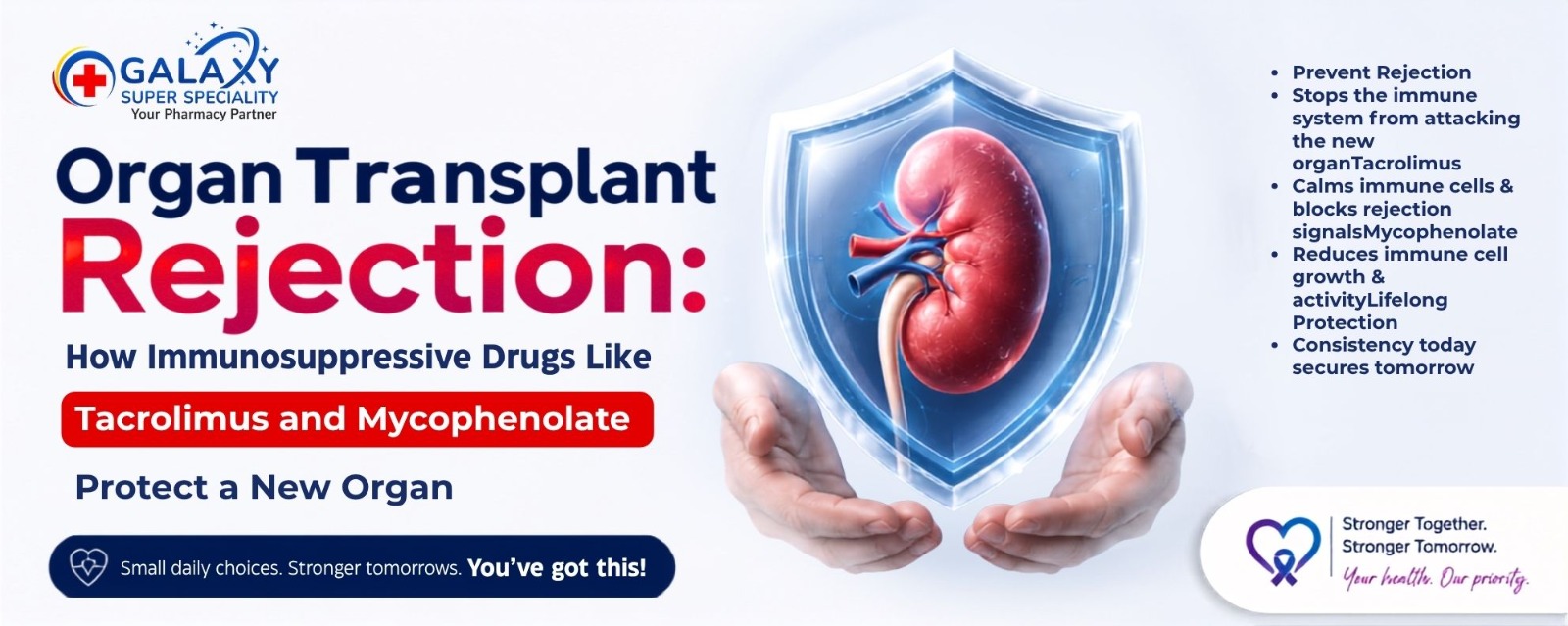 An organ transplant can offer a new opportunity for health and independence, but the journey does not end with surgery. One of the most important challenges after transplantation is organ transplant rejection—a process in which the body’s immune system recognizes the transplanted organ as foreign and attempts to attack it.
This is why immunosuppressive, or anti-rejection, medicines are an essential part of transplant care. Medicines such as tacrolimus and mycophenolate are commonly used in transplant regimens, although the exact combination varies according to the transplanted organ, patient characteristics and transplant team’s treatment plan. (niddk.nih.gov)
What Is Organ Transplant Rejection?
The immune system is designed to recognize and attack substances that do not belong in the body.
After a transplant, the immune system can recognize the donated organ as foreign. If the immune response is not adequately controlled, immune cells can damage the transplanted organ.
This process is known as transplant rejection.
Rejection can occur even when a transplant initially appears to be working well. It can also occur at different points after transplantation, which is why long-term monitoring remains important. For kidney transplant recipients, routine blood tests may detect changes associated with rejection before noticeable symptoms appear. (niddk.nih.gov)
How Do Immunosuppressive Medicines Work?
Immunosuppressive medicines reduce or modify the immune response so that the body is less likely to attack the transplanted organ.
The goal is to find the right balance:
Enough immunosuppression to reduce rejection risk, while avoiding unnecessary suppression of the immune system.
Too little immunosuppression can increase the risk of rejection, while excessive immunosuppression can increase the risk of infections and other complications. (niddk.nih.gov)
The exact medication regimen is individualized and may change over time.
Tacrolimus: An Important Anti-Rejection Medicine
Tacrolimus belongs to a group of medicines called calcineurin inhibitors.
It works by suppressing specific immune-cell signaling involved in the body’s immune response.
Tacrolimus is widely used in transplant medicine and may form part of the long-term immunosuppressive regimen for appropriate transplant recipients.
Because tacrolimus has a relatively narrow therapeutic range, healthcare teams commonly monitor blood levels and adjust the dose when necessary.
The dose can be affected by other medicines, health conditions and interactions with certain foods or supplements.
Patients should therefore take tacrolimus exactly as prescribed and discuss any new medicine, supplement or dietary product with their transplant team or pharmacist.
Mycophenolate: Another Tool Against Rejection
Mycophenolate is another immunosuppressive medicine commonly used in transplant care.
It works through a different mechanism from tacrolimus and helps reduce the ability of certain immune cells to multiply.
Using medicines with complementary mechanisms allows transplant teams to build a broader immunosuppressive strategy while balancing effectiveness and potential side effects.
Mycophenolate may be prescribed as mycophenolate mofetil or mycophenolic acid, depending on the specific treatment plan.
The medicine and dose should always be determined by the treating transplant team.
Why Combination Therapy May Be Used
Transplant immunosuppression often involves more than one medicine.
Different medicines target different parts of the immune response. Combining therapies can allow clinicians to achieve the desired level of immunosuppression while managing medication-related risks.
A transplant regimen may include combinations involving:
- Tacrolimus or another calcineurin inhibitor
- Mycophenolate
- Corticosteroids
- mTOR inhibitors
- Other immunosuppressive medicines in selected situations
Not every patient receives the same combination.
The transplant team’s choice depends on factors such as the transplanted organ, rejection risk, previous medical history, infections, kidney function and medication tolerance.
Why Medication Adherence Matters
One of the most important parts of preventing organ transplant rejection is taking anti-rejection medication consistently.
Missing doses or stopping medication without medical advice can increase the risk of rejection.
For kidney transplant recipients, NIDDK explains that anti-rejection medicines are required to prevent the immune system from attacking the transplanted kidney and that regular medical follow-up is essential. (niddk.nih.gov)
Simple Ways to Improve Medication Adherence
Patients may find it helpful to:
- Take medicines at the same time every day
- Use alarms or reminders
- Keep an updated medication list
- Refill prescriptions before they run out
- Carry medicines when travelling
- Keep regular appointments
- Ask questions when instructions are unclear
Most importantly:
Never stop an anti-rejection medicine because you feel well.
A transplant can function normally while rejection is developing, which is why medication adherence and monitoring remain essential.
Can Rejection Happen Even When Medicines Are Taken Correctly?
Yes.
Immunosuppressive medicines significantly reduce the risk of rejection, but they cannot guarantee that rejection will never occur.
The immune system is complex, and rejection can sometimes happen despite appropriate treatment.
This is why transplant care involves both medication and monitoring.
If tests or symptoms suggest a problem, the transplant team can investigate and adjust treatment when necessary.
What Are the Warning Signs of Rejection?
Rejection may not always cause obvious symptoms.
For kidney transplant recipients, possible signs can include:
- Reduced urine output
- Swelling
- Sudden weight gain
- Increased blood pressure
- Fever
- Pain or tenderness around the transplanted kidney
However, these symptoms can have many causes and do not automatically mean rejection. (niddk.nih.gov)
Routine blood tests can be particularly important because kidney transplant rejection may be detected before symptoms become obvious.
If a transplant recipient feels unwell or develops concerning symptoms, they should contact their transplant team promptly.
Monitoring Is as Important as Medication
Taking medication correctly is only one part of transplant protection.
Doctors may regularly monitor:
- Organ function
- Immunosuppressant blood levels
- Blood pressure
- Kidney and liver function
- Blood counts
- Blood glucose
- Signs of infection
- Potential medication side effects
For kidney transplantation, blood tests can show how well the transplanted kidney is filtering waste and may alert clinicians to potential problems. (niddk.nih.gov)
The Other Side of Immunosuppression
Immunosuppressive medicines are essential, but reducing immune activity can also create risks.
Because the immune system is suppressed, transplant recipients have a higher risk of infections.
Depending on the medication and duration of treatment, other potential complications can include:
- High blood pressure
- Diabetes or elevated blood glucose
- Changes in cholesterol
- Bone problems
- Kidney or liver effects
- Increased risk of certain cancers
The specific risks vary by medicine and patient. Regular monitoring allows doctors to identify and manage these complications when possible. (niddk.nih.gov)
This is why transplant medicine is about balance, not simply using the strongest possible immune suppression.
Food, Medicines and Drug Interactions
Some transplant medicines interact with other medicines and certain foods.
For example, grapefruit and grapefruit juice can affect the blood levels of some immunosuppressive medicines.
Over-the-counter medicines, vitamins, herbal products and dietary supplements can also interact with transplant medicines.
Patients should always tell their doctor or pharmacist that they have received an organ transplant before starting a new medication or supplement. (niddk.nih.gov)
What Happens If Rejection Is Suspected?
If a transplant team suspects rejection, they may perform additional tests to determine what is happening.
For a kidney transplant, this may include blood tests, imaging and, when appropriate, a kidney biopsy.
Treatment depends on the type and severity of rejection and the organ involved.
Doctors may adjust immunosuppressive therapy or use additional treatments when clinically appropriate.
The earlier a potential problem is identified, the sooner the transplant team can evaluate it and determine the appropriate response.
Lifelong Protection Requires Consistency
Transplant care is not a short-term process.
For many kidney transplant recipients, anti-rejection medicines are required for as long as the transplanted kidney is functioning. (niddk.nih.gov)
This makes consistency one of the most important parts of long-term transplant care.
Small daily choices can protect something that has changed your life.
Taking medication on schedule, attending appointments, following dietary guidance and reporting unusual symptoms can all contribute to better long-term transplant management.
Transplant Care at Galaxy Super Speciality
At Galaxy Super Speciality, transplant care focuses on specialist monitoring, medication management, appropriate diagnostic evaluation and long-term patient support.
For transplant recipients, the goal is not only to protect the transplanted organ but also to monitor the broader health effects of long-term immunosuppressive treatment.
If you have questions about tacrolimus, mycophenolate, medication side effects, transplant monitoring or possible symptoms of rejection, speak with your transplant specialist before making any changes to your treatment.
Protect the Organ. Protect Your Future.
A transplanted organ represents an extraordinary medical achievement—and protecting it requires an ongoing partnership between the patient and healthcare team.
Immunosuppressive medicines such as tacrolimus and mycophenolate are important tools in reducing the risk of rejection for many transplant recipients, but medication is only one part of long-term transplant care.
Take your medicines. Keep your appointments. Know your warning signs.
Because protecting your transplant is a lifelong commitment.
Frequently Asked Questions
What is organ transplant rejection?
Organ transplant rejection occurs when the body’s immune system recognizes a transplanted organ as foreign and attacks it.
How do tacrolimus and mycophenolate prevent rejection?
They suppress different parts of the immune response. Tacrolimus reduces immune-cell signaling, while mycophenolate reduces the ability of certain immune cells to multiply.
Do all transplant patients take tacrolimus and mycophenolate?
No. Immunosuppressive regimens are individualized. Tacrolimus and mycophenolate are commonly used, but other medicines may be included depending on the organ transplanted and the patient’s clinical circumstances.
Can I stop my anti-rejection medicine if I feel healthy?
No. Never stop or change immunosuppressive medication without instructions from your transplant team. Rejection can sometimes develop without obvious symptoms. (niddk.nih.gov)
What happens if I accidentally miss a dose?
Do not automatically take an extra dose. Contact your transplant team or pharmacist for product-specific instructions, because the correct action can depend on the medicine and timing of the missed dose.
Can immunosuppressive medicines cause side effects?
Yes. Because they reduce immune activity, they can increase infection risk and may contribute to other problems such as high blood pressure, diabetes, changes in cholesterol or kidney effects, depending on the medicine. (niddk.nih.gov)
Can rejection be detected before symptoms appear?
Yes. In kidney transplantation, routine blood tests can sometimes detect changes suggesting rejection before noticeable symptoms occur. (niddk.nih.gov)