 +91-9667229022| +91-9811604479

Oncology cold chain logistics for temperature-sensitive cancer medicines
In modern cancer care, treatment precision does not end with selecting the right medicine. Oncology cold chain logistics also plays an important role in protecting certain temperature-sensitive medicines from the time they leave the manufacturer until they are stored and prepared for patient use.
Many oncology medicines, including certain biologics and other temperature-sensitive products, require specific storage and transportation conditions. Maintaining those conditions throughout the supply chain helps preserve product quality according to the manufacturer’s specifications.
When Every Degree Matters
Some medicines used in oncology require carefully controlled temperatures during storage and transportation. If a product is exposed to temperatures outside its specified range, its quality or stability may potentially be affected depending on the medicine, duration of exposure and applicable stability data.
This makes oncology cold chain logistics an important component of pharmaceutical quality management.
The cold chain can involve multiple stages, including:
- Manufacturer storage
- Specialized packaging
- Refrigerated transportation
- Distribution and receiving
- Hospital pharmacy storage
- Temperature monitoring
- Preparation and handling before administration
Each stage requires appropriate procedures and oversight.
What Is an Oncology Cold Chain?
A cold chain is a temperature-controlled supply system designed to maintain specified environmental conditions for products that require controlled storage.
For oncology medicines, the exact requirements vary from product to product. Some medicines may require refrigerated storage, while others may have different temperature, light or handling requirements.
Healthcare organizations therefore need to follow the manufacturer’s approved storage instructions and applicable pharmaceutical quality standards rather than assuming that every oncology medicine requires the same conditions.
The objective is straightforward: maintain the medicine within its required conditions throughout its journey.
Why Cold Chain Matters for Oncology Medicines
Modern oncology increasingly uses complex biological and specialty medicines. Some of these products can be sensitive to temperature changes and other environmental conditions.
Maintaining the appropriate storage environment helps healthcare teams preserve the medicine according to its approved specifications.
A temperature excursion does not automatically mean that a medicine has become unusable. The appropriate response depends on the specific product, the recorded temperature, the duration of the excursion and manufacturer or stability guidance.
That is why accurate monitoring and documented procedures are essential.
Technology Behind Safer Medicine Delivery
Modern oncology cold chain logistics increasingly uses technology to improve visibility and reduce avoidable risks.
Real-Time Temperature Monitoring
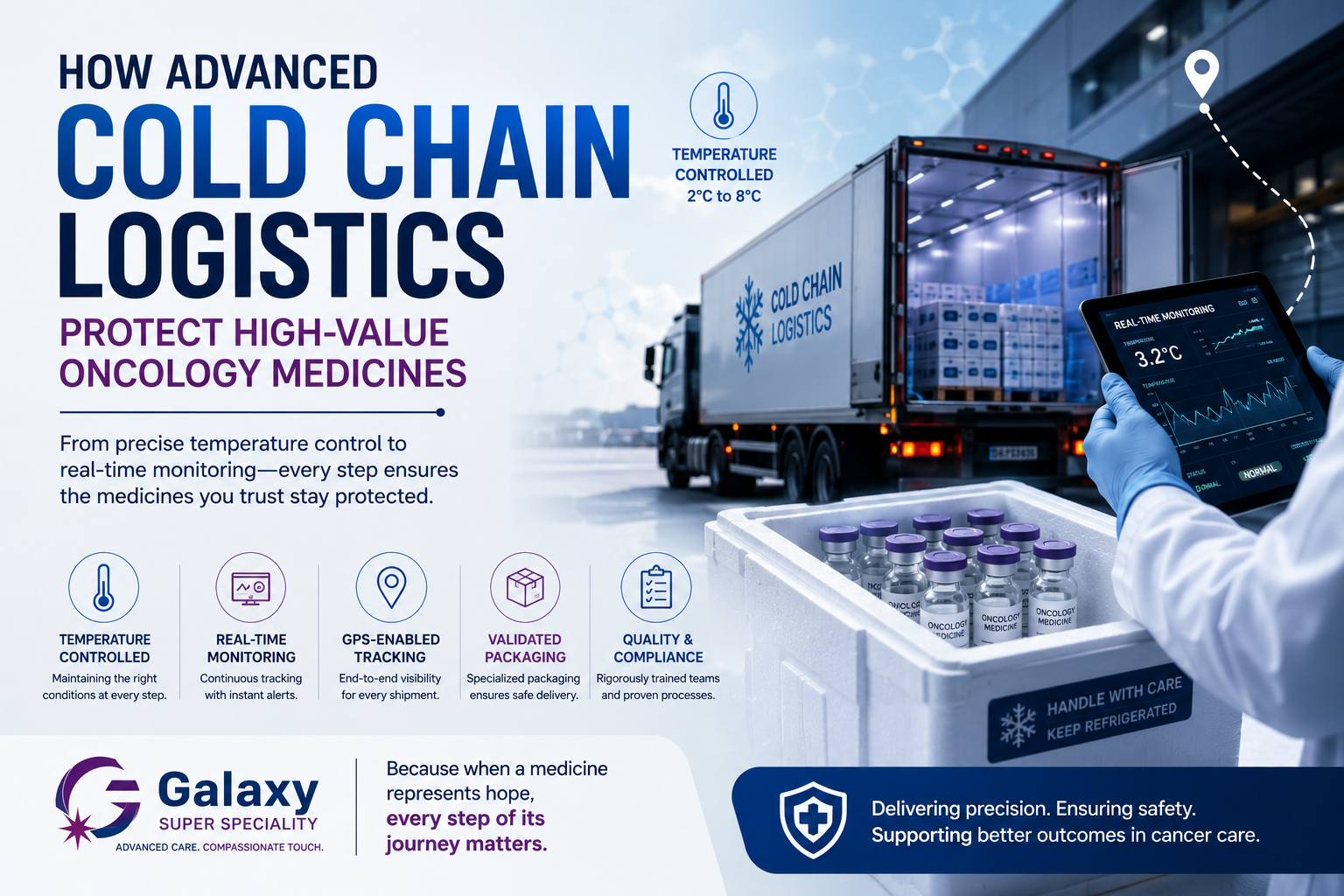
Temperature-monitoring devices can continuously or periodically record conditions during transportation and storage. Alerts can help teams identify potential excursions that require investigation.
Data Loggers
Data loggers create a record of temperature conditions over time. These records can support quality assurance and help teams investigate potential deviations.
Validated Packaging
Specialized packaging systems can be designed to maintain the required temperature range for a defined period under specified conditions.
GPS and Shipment Tracking
Tracking technologies can provide visibility into shipment location and movement, helping logistics teams coordinate deliveries and respond to unexpected delays.
Temperature-Mapped Storage
Temperature mapping can help identify variations within storage areas and support appropriate placement of temperature-sensitive products.
Together, these technologies can create greater visibility across the pharmaceutical supply chain.
Technology Alone Is Not Enough
Advanced equipment is only one part of an effective cold chain system.
Safe handling also depends on:
- Trained healthcare and logistics personnel
- Standard operating procedures
- Appropriate storage equipment
- Equipment maintenance and calibration
- Documented temperature monitoring
- Excursion-management procedures
- Contingency and backup plans
- Appropriate receiving and inventory processes
- Compliance with applicable regulatory requirements
A sophisticated monitoring system cannot replace trained people and well-designed processes.
What Happens During a Temperature Excursion?
A temperature excursion occurs when a medicine is exposed to conditions outside its specified storage range.
When this happens, healthcare and pharmaceutical teams should follow established procedures rather than automatically discarding or using the product.
The response may involve documenting the event, quarantining the affected product when appropriate, reviewing the temperature records and consulting product-specific stability information or the manufacturer.
The final decision should be based on the medicine’s approved requirements and applicable quality procedures.
From Supply Chain to Patient Care
For patients and families, the pharmaceutical supply chain may seem far removed from the treatment room.
However, the journey of a temperature-sensitive oncology medicine is part of the broader system supporting safe and reliable cancer care.
From controlled storage to appropriate transportation and hospital pharmacy handling, multiple processes contribute to maintaining medicine quality before it reaches the patient.
As oncology continues to advance, these systems become increasingly important.
The Future of Oncology Cold Chain Logistics
The future of oncology cold chain logistics is likely to involve greater integration of digital monitoring, automated alerts, predictive analytics and end-to-end supply-chain visibility.
Connected monitoring systems can help healthcare organizations identify potential issues earlier and maintain better records of storage and transportation conditions.
At the same time, the growing complexity of specialty medicines means that logistics teams, pharmacists, clinicians and healthcare administrators will need to work together closely.
The goal is not simply to move a medicine from one location to another. It is to maintain the conditions required to preserve its quality throughout the journey.
Supporting Quality-Focused Oncology Care at Galaxy Super Speciality
At Galaxy Super Speciality, quality-focused cancer care extends beyond diagnosis and treatment. It also includes attention to the systems and processes that support the safe handling and delivery of specialized medicines.
For patients undergoing cancer treatment, medicine selection, administration and supportive care are individualized according to the clinical situation and guidance of the treating medical team.
If you or your loved one is undergoing cancer treatment, speak with our specialist oncology team to understand the treatment options, medicine requirements and supportive care appropriate for your individual needs.
Conclusion
Advanced cancer treatment depends on more than innovative medicines. It also depends on the systems that help preserve medicine quality from supply chain to patient care.
Oncology cold chain logistics brings together controlled storage, specialized transportation, temperature monitoring, trained personnel and quality-focused processes to help protect temperature-sensitive medicines.
Because when a medicine represents hope, every step of its journey matters.
Frequently Asked Questions
What is oncology cold chain logistics?
Oncology cold chain logistics refers to the controlled storage, transportation, monitoring and handling of temperature-sensitive medicines used in cancer care according to their specified requirements.
Do all oncology medicines need refrigeration?
No. Storage requirements vary between medicines. Some require refrigeration, while others may have different temperature, light or handling requirements. Healthcare teams should always follow the manufacturer’s approved storage instructions.
What is a temperature excursion?
A temperature excursion occurs when a medicine is exposed to temperatures outside its specified storage range. The impact depends on the specific product, the temperature reached, exposure duration and available stability information.
What happens if an oncology medicine experiences a temperature excursion?
The product should be handled according to established quality procedures. Teams may review temperature records, quarantine the product when appropriate and consult product-specific stability information or the manufacturer before deciding whether it can be used.
Why is temperature monitoring important?
Temperature monitoring provides evidence of the environmental conditions experienced by a medicine during storage or transportation. It can help teams identify potential excursions and support quality-assurance investigations.
Does cold chain logistics affect patient safety?
Maintaining appropriate storage and transportation conditions is an important part of pharmaceutical quality management. Proper procedures help ensure medicines are handled according to their specified requirements before administration to patients.