 +91-9667229022| +91-9811604479

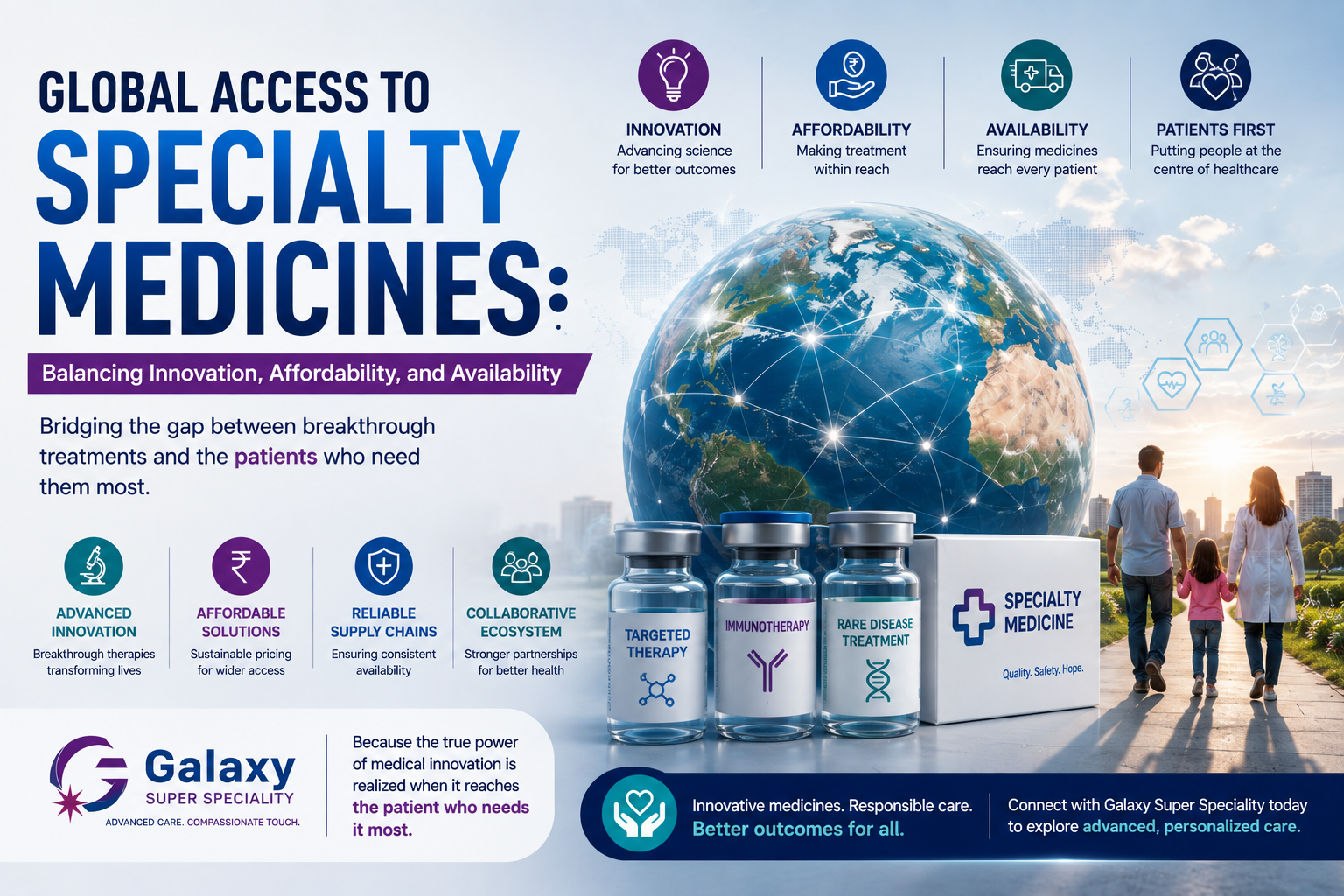
Improving access to specialty medicines requires innovation, affordability, reliable supply and patient-centered care.
The rapid development of modern medicine has created new possibilities for patients with cancer, rare diseases, autoimmune conditions and other complex illnesses. However, access to specialty medicines remains an important global healthcare challenge.
Advanced medicines can involve complex research, specialized manufacturing, sophisticated distribution systems and highly trained medical teams. For patients, access depends on more than whether a medicine exists. Availability, affordability, quality, appropriate diagnosis, regulatory pathways and healthcare infrastructure can all influence whether a patient can receive the treatment they need.
What Are Specialty Medicines?
Specialty medicines are generally products that require specialized clinical management, monitoring, storage, administration or distribution. They can include certain biologic medicines, targeted cancer therapies, immunotherapies and treatments for rare or complex conditions.
These medicines can offer important treatment options, but their complexity can create additional challenges for healthcare systems.
For example, some specialty medicines may require:
- Specialized storage or transportation
- Diagnostic or biomarker testing
- Administration by trained healthcare professionals
- Regular clinical monitoring
- Multidisciplinary medical care
- Complex reimbursement or insurance processes
This means that improving access to specialty medicines requires more than simply increasing medicine availability.
The Global Access Challenge
Access to medicines is influenced by multiple factors across the healthcare system.
WHO notes that achieving universal health coverage requires affordable access to safe, effective and quality-assured medicines and health products. Challenges can include high prices, shortages, supply-chain limitations and regulatory barriers.
For specialty medicines, these challenges can become particularly significant because of the complexity and cost associated with some advanced therapies.
A patient may face barriers at several stages—from diagnosis and treatment selection to medicine availability, financing and access to specialized healthcare professionals.
This is why access to specialty medicines is not simply a pharmaceutical issue. It is a broader healthcare-system challenge.
Balancing Medical Innovation With Affordability
Medical innovation is essential for improving treatment options, but innovation must be supported by sustainable healthcare systems.
Governments, pharmaceutical manufacturers, hospitals, insurers, clinicians, regulators and patient organizations all have roles to play in improving access.
Potential approaches include:
- Evidence-based pricing policies
- Health technology assessment
- Appropriate use of quality-assured generics and biosimilars
- Patient-support programs
- Efficient procurement systems
- Reliable medicine supply chains
- Streamlined regulatory processes
- Appropriate insurance and reimbursement mechanisms
WHO recommends that countries consider pharmaceutical pricing policies that can help improve affordability while maintaining access to quality medicines.
The objective is not simply to make medicines cheaper. It is to develop sustainable systems that balance quality, safety, clinical effectiveness, affordability and availability.
How Biosimilars Can Expand Access
Biosimilars are an important part of the conversation around affordable access to biologic medicines.
A biosimilar is a biological medicine that is highly similar to an already approved biological medicine, with no clinically meaningful differences in terms of quality, safety and efficacy when appropriately evaluated.
WHO has highlighted biosimilars as a potential way to expand access to important biologic therapies. Increased availability and competition can contribute to lower costs and give healthcare systems additional treatment options.
For example, WHO has highlighted the role of trastuzumab and rituximab biosimilars in expanding access to important cancer treatments in several countries, including India.
However, biosimilars must still meet applicable regulatory and quality requirements. Their availability and use depend on national regulatory frameworks, clinical guidance and healthcare-system decisions.
Availability Is More Than Having a Medicine on the Market
A medicine being approved in a country does not automatically mean every patient can access it.
Availability can depend on:
- Manufacturing capacity
- Procurement systems
- Distribution networks
- Hospital infrastructure
- Stock management
- Reimbursement policies
- Geographic location
- Availability of trained specialists
WHO emphasizes that reliable medicine supply systems involve several stages, including selection, forecasting, procurement, storage and distribution.
A resilient supply chain can therefore be an important part of ensuring that patients receive appropriate medicines when they need them.
The Role of Diagnostics and Specialist Care
Access to specialty medicines also depends on accurate diagnosis and appropriate treatment selection.
Some advanced therapies are intended for patients with specific disease characteristics or biomarkers. This means that diagnostic testing and specialist evaluation may be necessary before a treatment can be considered.
In oncology, for example, molecular or biomarker testing can help identify whether certain targeted treatments may be appropriate for an individual patient.
This highlights an important principle: access to advanced medicine also requires access to the healthcare expertise needed to use it appropriately.
Building a More Patient-Centered Healthcare System
Hospitals have an important role in helping patients navigate complex treatment journeys.
Patient-centered specialty care may involve coordinating:
- Specialist consultations
- Diagnostic investigations
- Treatment planning
- Pharmacy and medicine requirements
- Multidisciplinary care
- Treatment monitoring
- Supportive services
- Follow-up care
For patients and families, having these services coordinated can make complex healthcare decisions easier to understand.
The goal is not simply to provide access to a medicine, but to provide access to the right care, for the right patient, at the right time.
The Future of Access to Specialty Medicines
The future of healthcare will depend on finding a sustainable balance between scientific innovation and real-world accessibility.
New therapies will continue to emerge, but healthcare systems will also need strategies that support affordability, reliable supply, quality assurance and appropriate clinical use.
WHO’s 2025 Essential Medicines List emphasizes that essential medicines should be available in functioning health systems, of assured quality and affordable to both individuals and healthcare systems.
As medicine becomes increasingly specialized, collaboration across governments, manufacturers, healthcare providers, insurers, regulators and patient communities will become even more important.
Specialty Care at Galaxy Super Speciality
At Galaxy Super Speciality, our approach to advanced healthcare combines specialist medical expertise, appropriate diagnostic evaluation, evidence-based treatment and compassionate patient care.
For patients dealing with cancer, rare diseases or other complex health conditions, understanding the available treatment options is an important part of the healthcare journey.
Our medical teams work to help patients and families understand their condition, treatment possibilities and the care required for their individual circumstances.
Take the Next Step Toward Advanced Care
If you or your loved one requires specialized treatment, do not let uncertainty delay seeking appropriate medical advice.
Speak with a qualified specialist to understand your diagnosis, available treatment options and the support that may be appropriate for your individual needs.
At Galaxy Super Speciality, advanced healthcare is about more than innovation. It is about making expert, evidence-based and compassionate care part of the patient’s journey.
Because the true value of medical innovation is realized when it can meaningfully improve the life of the person who needs it.
Frequently Asked Questions
What are specialty medicines?
Specialty medicines are treatments that may require specialized clinical management, monitoring, storage, administration or distribution. They can include certain biologics, targeted therapies and treatments for rare or complex conditions.
Why can specialty medicines be difficult to access?
Access can be influenced by factors such as cost, availability, insurance coverage, regulatory requirements, supply chains, diagnostic capabilities and access to specialized healthcare professionals.
Can biosimilars improve access to specialty medicines?
In appropriate circumstances, quality-assured biosimilars can provide additional options for certain biologic medicines and may contribute to improved affordability and access. WHO identifies biosimilars as one potential tool for expanding access to biologic therapies.
Does medicine approval guarantee patient access?
No. Regulatory approval is only one part of access. Procurement, supply, financing, distribution, healthcare infrastructure and specialist expertise can also influence whether patients can actually receive a medicine.
How can hospitals help improve access to specialty care?
Hospitals can help by providing appropriate diagnostics, specialist consultations, treatment planning, multidisciplinary care, medicine management and patient support.
Why is affordability important in healthcare?
High medicine costs can create financial barriers for individuals and healthcare systems. Sustainable pricing, financing and procurement approaches can help improve access while maintaining quality and safety.
Conclusion
The future of healthcare depends on more than discovering breakthrough medicines. It depends on creating systems that allow patients to access appropriate treatments safely, affordably and when they need them.
Access to specialty medicines sits at the intersection of innovation, affordability, availability, diagnostics, healthcare expertise and patient-centered care.
Innovation matters. Affordability matters. Availability matters.
Most importantly, patients matter.