 +91-9667229022| +91-9811604479


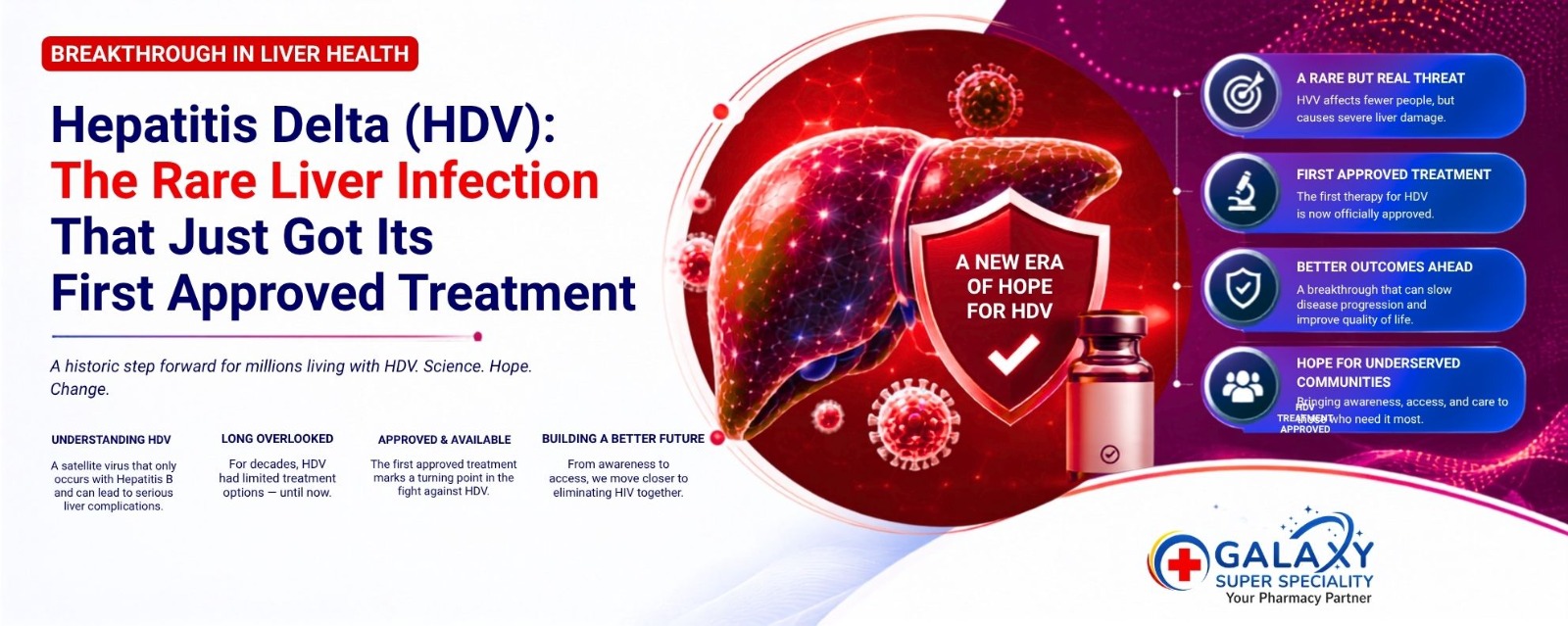 Hepatitis D treatment has entered a new era in 2026 following a major regulatory milestone: the U.S. Food and Drug Administration approved Hepcludex (bulevirtide-gmod) for adults with chronic hepatitis delta virus (HDV) infection who do not have cirrhosis or who have compensated cirrhosis. It is the first FDA-approved treatment specifically for chronic HDV infection.
The development is significant because chronic HDV can progress rapidly and is associated with serious liver complications, including fibrosis, cirrhosis, liver cancer and liver failure.
But what exactly is hepatitis D, who is at risk, and what does the new treatment mean for patients?
What Is Hepatitis D?
Hepatitis D, also known as hepatitis delta, is a viral infection that affects the liver.
Unlike many other viruses, HDV cannot replicate independently. It requires the hepatitis B virus (HBV) to complete its life cycle.
This means a person cannot develop hepatitis D without also having hepatitis B infection.
HDV can occur at the same time as a new HBV infection, known as coinfection, or it can occur in someone who already has chronic hepatitis B. The latter is known as superinfection and can lead to more rapid progression of liver disease.
Why Is Hepatitis D Considered Serious?
Hepatitis D is less common than hepatitis B or hepatitis C, but it can be particularly aggressive.
WHO describes chronic HDV as the most severe form of chronic viral hepatitis because it can progress more rapidly toward liver-related complications and death.
Possible long-term complications include:
- Liver fibrosis
- Cirrhosis
- Liver failure
- Hepatocellular carcinoma, a form of liver cancer
- Liver-related death
The risk is particularly important in people who develop HDV superinfection on existing chronic hepatitis B.
Why Was Hepatitis D Treatment Such a Challenge?
For many years, treatment options for chronic HDV were limited.
WHO notes that pegylated interferon alpha was previously the principal treatment option, but its effectiveness, side effects and contraindications limited its use. Complete virological responses were achieved in only a minority of treated patients, and relapse could occur.
This created a significant unmet need.
Unlike hepatitis B and hepatitis C, where several established antiviral strategies have been available, HDV treatment has historically had fewer options.
That makes the development of newer therapies particularly important.
The 2026 Breakthrough: Bulevirtide
In May 2026, the FDA approved Hepcludex (bulevirtide-gmod) for the treatment of chronic HDV infection in adults without cirrhosis or with compensated cirrhosis.
The approval represents an important milestone in the United States because it is the first FDA-approved treatment specifically for chronic hepatitis D.
However, this is not the first regulatory approval of bulevirtide globally. The European Medicines Agency authorized Hepcludex in the European Union in 2020 for eligible patients with chronic HDV and compensated liver disease.
How Does Bulevirtide Work?
Bulevirtide is an entry inhibitor.
HDV depends on HBV-related mechanisms to enter liver cells. Bulevirtide interferes with a key entry pathway, reducing the ability of the virus to enter hepatocytes.
This represents a different therapeutic approach from traditional antiviral strategies.
Hepcludex is administered as a subcutaneous injection once daily under the approved U.S. indication.
What Did the Clinical Evidence Show?
The FDA approval was supported by data from a multicenter randomized Phase 3 study known as MYR301.
In the trial, patients received either immediate bulevirtide treatment or delayed treatment.
At week 48, the combined response—defined using HDV RNA reduction or undetectability together with normalization of ALT—was:
- 48% in the immediate-treatment group
- 2% in the delayed-treatment group
The proportion of patients with undetectable HDV RNA also increased with longer treatment exposure. At weeks 48, 96 and 144, undetectable HDV RNA was reported in approximately 20%, 36% and 50% of patients receiving treatment, respectively.
These findings helped support the FDA’s decision to approve the treatment.
What Does the New Approval Mean for Patients?
For people living with chronic HDV, the development provides an additional evidence-based treatment option where previously there was no FDA-approved therapy specifically for the disease.
It may help clinicians address an infection that can otherwise progress to serious liver complications.
However, a new treatment does not mean that every patient with HDV should receive it automatically.
Treatment decisions depend on factors such as:
- HDV status
- Hepatitis B status
- Liver disease stage
- Presence or absence of cirrhosis
- Liver function
- Previous treatments
- Other medical conditions
- Potential drug interactions
- Treatment availability
A hepatologist or infectious-disease specialist should determine the most appropriate approach.
Who Can Develop Hepatitis D?
Because HDV requires HBV, people living with hepatitis B are the population at risk.
HDV can be transmitted through routes similar to HBV, including exposure to infected blood and certain sexual exposures. WHO identifies blood-borne transmission as an important route.
Risk can be higher in certain populations, including people who inject drugs and some groups with higher prevalence of HBV infection.
What Are the Symptoms of Hepatitis D?
Hepatitis D can cause symptoms similar to other forms of viral hepatitis.
Depending on whether the infection is acute or chronic and how advanced the liver disease is, symptoms may include:
- Fatigue
- Loss of appetite
- Nausea
- Vomiting
- Abdominal discomfort
- Dark urine
- Pale-colored stools
- Jaundice
- Fever
However, symptoms are not always obvious, particularly in chronic infection.
This means that people with hepatitis B may need appropriate evaluation for HDV even when they feel well.
WHO notes that diagnosis of chronic HDV involves serological testing for exposure and molecular testing for HDV RNA to confirm active infection.
How Is Hepatitis D Diagnosed?
Diagnosis generally involves more than one test.
Healthcare professionals may evaluate:
Hepatitis B Status
Because HDV requires HBV, determining whether a person has hepatitis B is an essential part of evaluation.
HDV Antibodies
Blood testing can identify evidence of exposure to HDV.
HDV RNA
Molecular testing for HDV RNA can help determine whether active viral replication is present.
Liver Assessment
Doctors may also evaluate the condition of the liver through blood tests, imaging and non-invasive assessments of fibrosis.
In selected cases, additional investigations may be required.
Why Liver Fibrosis Matters
One of the most important questions in chronic HDV is not simply:
“Is the virus present?”
It is also:
“How much damage has the liver already sustained?”
Fibrosis refers to the formation of scar tissue in the liver.
As fibrosis progresses, it can eventually lead to cirrhosis.
People with advanced liver disease require careful monitoring because cirrhosis can increase the risk of liver failure and liver cancer.
This is why early diagnosis and specialist assessment are important.
Hepatitis B Vaccination Can Help Prevent Hepatitis D
One of the most important facts about hepatitis D is also one of the most useful for prevention:
You cannot get hepatitis D without hepatitis B.
Therefore, hepatitis B vaccination can prevent HDV infection in people who are not already infected with HBV.
However, hepatitis B vaccination does not protect a person who already has chronic hepatitis B from acquiring HDV.
For people already living with HBV, appropriate medical evaluation and prevention strategies remain important.
Does Hepatitis B Treatment Cure Hepatitis D?
Not necessarily.
Antiviral medicines used to manage hepatitis B can be important for controlling HBV, but WHO notes that nucleoside analogues used for HBV treatment do not directly control HDV.
This is one reason HDV requires specific clinical attention rather than simply treating it as another aspect of hepatitis B.
What About Treatment in Europe?
Bulevirtide is not entirely new internationally.
The European Medicines Agency authorized Hepcludex in 2020 for chronic HDV infection in eligible adults and children with compensated liver disease, following confirmation of HDV RNA.
The 2026 development is particularly significant because it brings the first FDA-approved treatment specifically for chronic HDV to the United States.
This distinction is important when discussing the treatment as a global medical breakthrough.
What Are the Potential Side Effects?
Like all medicines, bulevirtide can cause side effects.
The FDA reports potential adverse effects including:
- Injection-site reactions
- Headache
- Abdominal pain
- Fatigue
- Itching
- Hypersensitivity reactions
The U.S. prescribing information also contains a boxed warning concerning the possibility of severe acute exacerbations of HDV and HBV infection if treatment is discontinued.
Patients should therefore use the medicine only under appropriate specialist supervision and should not discontinue treatment without medical advice.
What Is the Future of HDV Treatment?
The treatment landscape for hepatitis D is changing rapidly.
Bulevirtide represents an important development, but research continues into:
- New antiviral strategies
- Combination treatments
- Longer-term treatment outcomes
- Improved diagnostic testing
- Better ways to assess liver fibrosis
- Strategies to reduce liver-related complications
The FDA approval itself includes a requirement for additional long-term study to verify clinical benefit and assess outcomes such as cirrhosis, liver decompensation, liver transplantation, liver cancer and liver-related death.
This highlights an important point:
Reducing viral activity is an important goal, but long-term liver outcomes remain essential.
What Should People With Hepatitis B Do?
If you have been diagnosed with chronic hepatitis B, ask your healthcare professional whether hepatitis D testing is appropriate.
This is particularly important if you have:
- Abnormal liver tests
- Unexplained worsening of liver disease
- Evidence of advanced fibrosis
- Risk factors for blood-borne infections
- Other clinical features that raise concern for HDV
Early identification can help determine whether specialist monitoring or treatment is appropriate.
Liver Care at Galaxy Super Speciality
At Galaxy Super Speciality, our approach to liver health combines specialist evaluation, appropriate diagnostic testing, evidence-based treatment and long-term monitoring.
For patients living with hepatitis B or suspected hepatitis D, appropriate testing can help clarify the infection status and assess the condition of the liver.
If you have hepatitis B, abnormal liver tests or concerns about hepatitis D, speak with a qualified hepatology or infectious-disease specialist about whether further evaluation is appropriate.
A New Chapter in Hepatitis D Care
For decades, hepatitis D remained one of the more challenging viral liver infections to treat.
The FDA’s 2026 approval of bulevirtide marks an important milestone by providing the first FDA-approved treatment specifically for chronic HDV infection.
It does not mean that hepatitis D has been solved.
But it does mean that patients and clinicians now have another important tool in the fight against a potentially serious liver disease.
Better awareness. Earlier diagnosis. More treatment options.
Because every breakthrough in liver care brings us one step closer to preventing serious liver disease and protecting long-term health.
Frequently Asked Questions
What is hepatitis D?
Hepatitis D, or HDV infection, is a viral infection of the liver that can occur only in people who also have hepatitis B infection.
Is hepatitis D serious?
Yes. Chronic HDV can accelerate liver damage and is associated with a higher risk of cirrhosis, liver cancer and liver-related complications.
Is there a treatment for hepatitis D in 2026?
Yes. In May 2026, the FDA approved bulevirtide-gmod (Hepcludex) as the first FDA-approved treatment for chronic HDV infection in eligible adults.
Is bulevirtide new worldwide?
No. Bulevirtide has been authorized in the European Union since 2020. The major 2026 milestone is its first FDA approval in the United States.
Can hepatitis D occur without hepatitis B?
No. HDV requires HBV for replication, so hepatitis D infection occurs only in the presence of hepatitis B infection.
Can hepatitis B vaccination prevent hepatitis D?
Yes. Because HDV requires HBV, preventing hepatitis B through vaccination also prevents HDV infection in people who are not already infected with HBV.
How is hepatitis D diagnosed?
Evaluation can include blood tests for HDV antibodies and molecular testing for HDV RNA to determine whether active infection is present.
Can hepatitis D be cured?
Treatment can suppress HDV and improve virological and biochemical outcomes, but the long-term goal is also to prevent progression of liver disease. Patients should discuss their individual prognosis and treatment options with a specialist.
Who should I see for hepatitis D?
A hepatologist, gastroenterologist with expertise in liver disease, or infectious-disease specialist experienced in viral hepatitis can evaluate and manage HDV.