 +91-9667229022| +91-9811604479


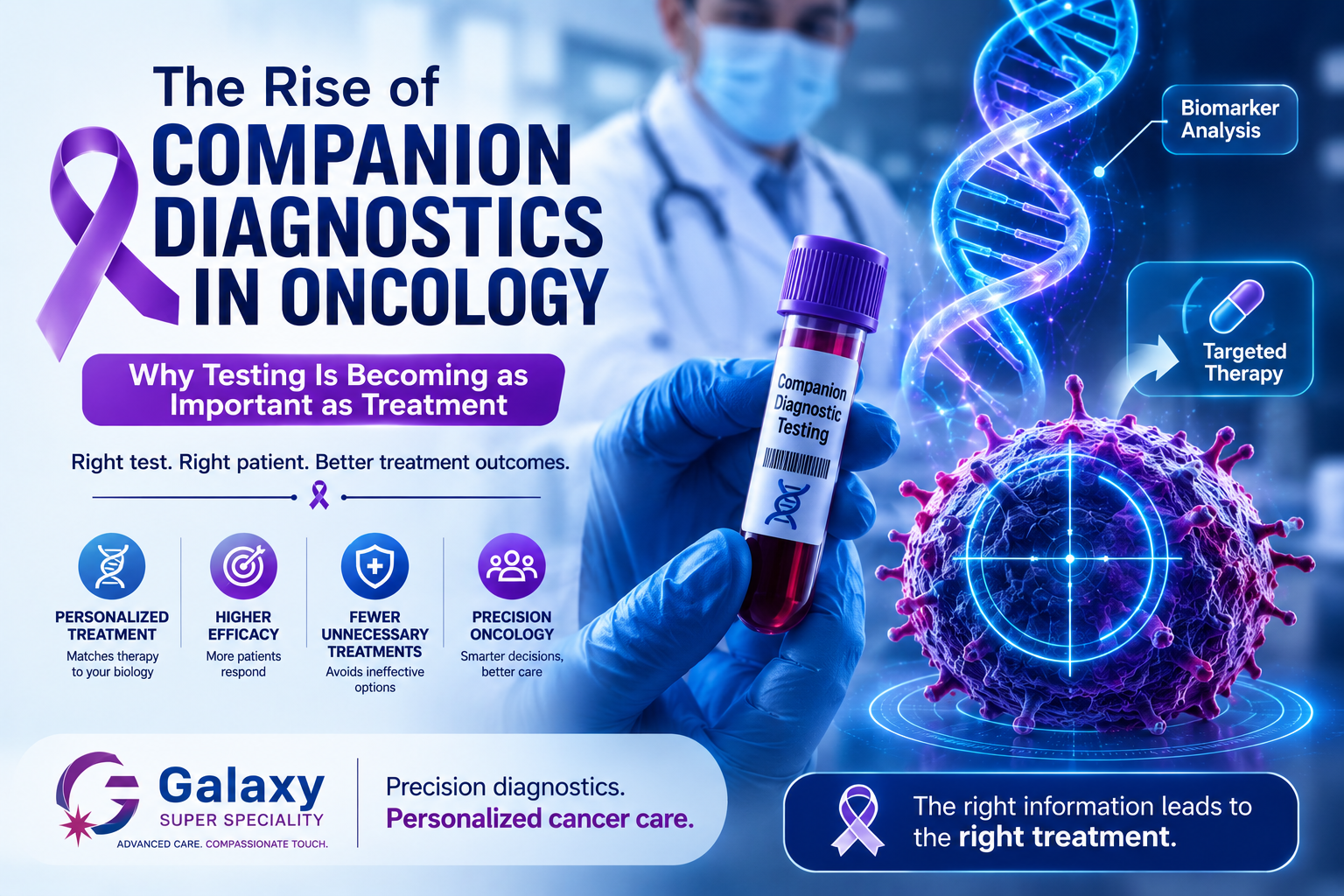
Companion diagnostics can help connect biomarker information with personalized cancer treatment decisions.
In modern oncology, treatment decisions are becoming increasingly personalized. The question is no longer simply, “What treatment is available for this cancer?” It is increasingly, “Which treatment is most appropriate for this specific patient and their tumor?”
This shift is driving greater interest in companion diagnostics in oncology—tests designed to provide biomarker information that can help determine whether a patient may benefit from a particular therapy or may face specific treatment-related risks.
As precision medicine continues to develop, diagnostic testing is becoming an increasingly important part of treatment planning.
What Are Companion Diagnostics in Oncology?
A companion diagnostic is a medical test, often an in vitro diagnostic test, that provides information considered essential for the safe and effective use of a corresponding therapeutic product.
In oncology, these tests may identify a specific gene alteration, protein or other biomarker associated with a particular treatment.
The FDA notes that companion diagnostics can help identify patients who are more likely to benefit from a therapy, identify patients who may have an increased risk of serious treatment-related side effects, or in some cases help monitor treatment response.
This creates an important connection between diagnosis and treatment selection.
Beyond Diagnosis: Testing That Guides Treatment
Traditional diagnostic tests help identify and classify disease. Biomarker testing can provide additional molecular information that may help clinicians determine which treatments could be appropriate.
For example, some targeted cancer therapies are designed to work against specific molecular changes. Biomarker testing can help determine whether those changes are present in a patient’s cancer.
NCI explains that biomarker testing may examine genes, proteins and other substances in cancer cells and can help doctors and patients make more informed treatment decisions.
Depending on the cancer and treatment, testing may involve:
- Tumor tissue
- Biopsy samples
- Blood samples
- Protein analysis
- Genetic or molecular testing
- Multigene or molecular panels
- Liquid biopsy approaches
The appropriate test depends on the patient’s cancer, clinical situation and the treatment being considered.
Why Companion Diagnostics Matter in Cancer Care
Cancer is not one single disease. Even patients diagnosed with the same cancer type can have different molecular characteristics.
These differences can influence how tumors respond to certain therapies.
Companion diagnostics in oncology can help clinicians identify relevant biomarkers and connect those findings with treatment options when an appropriate test-treatment relationship has been established.
Potential benefits include:
More Informed Treatment Selection
A biomarker result may help identify patients who are candidates for a particular targeted treatment.
Avoiding Some Unlikely-to-Benefit Treatments
In certain situations, the absence of a relevant biomarker can provide information that helps clinicians avoid a treatment that may be unlikely to work.
Identifying Treatment-Related Risks
Some companion diagnostics can identify patients who may have an increased risk of serious adverse effects associated with a particular therapy.
Supporting Precision Medicine
Biomarker information is an important component of precision oncology, where treatment decisions are increasingly informed by the biological characteristics of an individual’s cancer.
Connecting Patients With Clinical Trials
Some clinical trials use biomarkers to identify patients who may be eligible for specific investigational treatments. NCI describes this approach in biomarker-driven studies, including trials that match patients to therapies based on molecular characteristics rather than cancer location alone.
How Is Companion Diagnostic Testing Performed?
The testing process depends on the cancer and the biomarker being evaluated.
For some patients, doctors may use tissue obtained through a biopsy or surgery. In other situations, a blood-based liquid biopsy may be appropriate.
The sample is analyzed in a laboratory for specific molecular or biological characteristics.
The resulting report may identify biomarkers that could be relevant to treatment. The oncology team then interprets those findings alongside the patient’s diagnosis, pathology, stage, previous treatments and overall health.
A test result should therefore never be viewed in isolation.
Companion Diagnostics and Targeted Therapies
Targeted therapies are designed to act on specific changes that help cancer cells grow, divide or survive.
This is one of the areas where companion diagnostics in oncology can be particularly important.
For example, if a treatment is designed to target a particular molecular alteration, testing may be used to determine whether that alteration is present in the patient’s cancer.
NCI notes that some targeted therapies and immunotherapies work best—or are specifically indicated—for cancers with certain biomarkers.
This approach can create a more direct connection between:
Biomarker → Treatment → Patient
However, finding a matching biomarker does not guarantee that a treatment will work. Cancer biology is complex, and tumors can contain different populations of cells or change over time.
The Role of Companion Diagnostics in Immunotherapy
Biomarker testing is also relevant to some immunotherapy decisions.
Depending on the cancer, clinicians may evaluate biomarkers such as protein expression or tumor mutational characteristics when considering particular immune-based treatments.
The specific biomarkers and tests used vary by cancer type and therapy.
This is why testing should be interpreted within the context of the complete clinical picture rather than treated as a standalone answer.
Why Test Results Need Expert Interpretation
A companion diagnostic result provides information—it does not independently determine a patient’s treatment.
Doctors may consider:
- Cancer type
- Stage and extent of disease
- Pathology findings
- Biomarker results
- Previous treatments
- Overall health
- Potential treatment benefits
- Potential side effects
- Patient preferences
- Availability of approved treatments or clinical trials
In some cases, a biomarker may have no established treatment match. In other cases, a potential treatment may be available through a clinical trial or under specific regulatory circumstances.
NCI also notes that biomarkers can change over time, meaning a previous test may not always reflect the current molecular characteristics of a tumor.
The Challenge of Tumor Complexity
One of the major challenges in precision oncology is that tumors are not always genetically uniform.
Different cancer cells within the same tumor can have different molecular characteristics. A test may therefore identify a biomarker that is present in some cancer cells but not necessarily all of them.
Cancer can also evolve during treatment.
This means that companion diagnostics are powerful tools, but they are part of a broader clinical decision-making process rather than a guarantee of treatment success.
The Future: Test, Match, Treat
The growing role of companion diagnostics reflects a major transformation in oncology.
Instead of relying solely on cancer location and traditional classification, modern treatment increasingly incorporates molecular information to help guide therapeutic decisions.
The FDA maintains a list of authorized companion diagnostic devices, including tests associated with specific oncology therapies and broader groups of oncology treatments.
As molecular technologies continue to advance, testing may become increasingly integrated into treatment planning, clinical trials and precision oncology.
The future can be summarized simply:
Test. Understand. Match. Treat.
Making Treatment Decisions More Informed
The right diagnostic information can help an oncology team better understand the biological characteristics of a patient’s cancer.
At Galaxy Super Speciality, our approach to cancer care combines specialist expertise, appropriate diagnostic evaluation and evidence-based treatment planning.
For patients with cancer, the relevance of biomarker or companion diagnostic testing depends on the type and stage of cancer, previous treatment, available therapies and individual clinical circumstances.
A specialist oncology consultation can help determine whether additional testing could provide useful information for treatment planning.
Take the Next Step in Personalized Cancer Care
If you or your loved one has been diagnosed with cancer, ask your oncology team whether biomarker testing or a companion diagnostic may be relevant to the treatment plan.
Do not order, interpret or act on specialized cancer testing without appropriate medical guidance.
At Galaxy Super Speciality, we believe better-informed decisions begin with understanding the individual patient and the biology of their disease.
Because in modern oncology, the right treatment starts with the right information.
Frequently Asked Questions
What is a companion diagnostic?
A companion diagnostic is a medical test designed to provide information that is important for the safe or effective use of a corresponding therapy. It can help identify patients who may benefit from a treatment or who may have particular treatment-related risks.
Are companion diagnostics only used for cancer?
No. Companion diagnostics can be associated with therapies in other medical areas, but they have become particularly important in oncology and precision medicine.
What is biomarker testing in cancer?
Biomarker testing examines genes, proteins or other biological characteristics of a cancer to provide information that may help guide treatment decisions.
Does every cancer patient need companion diagnostic testing?
No. The need for testing depends on the cancer type, stage, treatment options and clinical circumstances. Your oncology team can determine whether biomarker or companion diagnostic testing could be useful.
Can a companion diagnostic guarantee that a treatment will work?
No. A biomarker may indicate that a patient could be a candidate for a particular therapy, but treatment response can be influenced by many other biological and clinical factors.
Can biomarker results change over time?
Yes. Cancer can evolve, and the molecular characteristics of a tumor can change. In some situations, doctors may consider repeat testing if the disease returns or progresses after treatment.
Where can patients learn more about companion diagnostics?
Patients should discuss the relevance of companion diagnostic or biomarker testing with their oncology team. The FDA also maintains a current list of authorized companion diagnostic devices.